Mechanical seal vs packing decisions should begin with leakage limits, pump duty, maintenance resources, and total operating cost. Both methods control fluid around a rotating shaft, yet they work differently. Therefore, their purchase prices reveal only part of the real cost. Product loss, flush water, shaft wear, labor, energy, and downtime can change the final result.
Packing remains useful in many water, wastewater, slurry, and general industrial pumps. However, it normally needs controlled leakage for lubrication and cooling. A mechanical seal uses precision faces and a very thin fluid film instead. Consequently, it can reduce visible leakage and routine adjustment when the pump and application support the design.
How Mechanical Seals and Packing Work
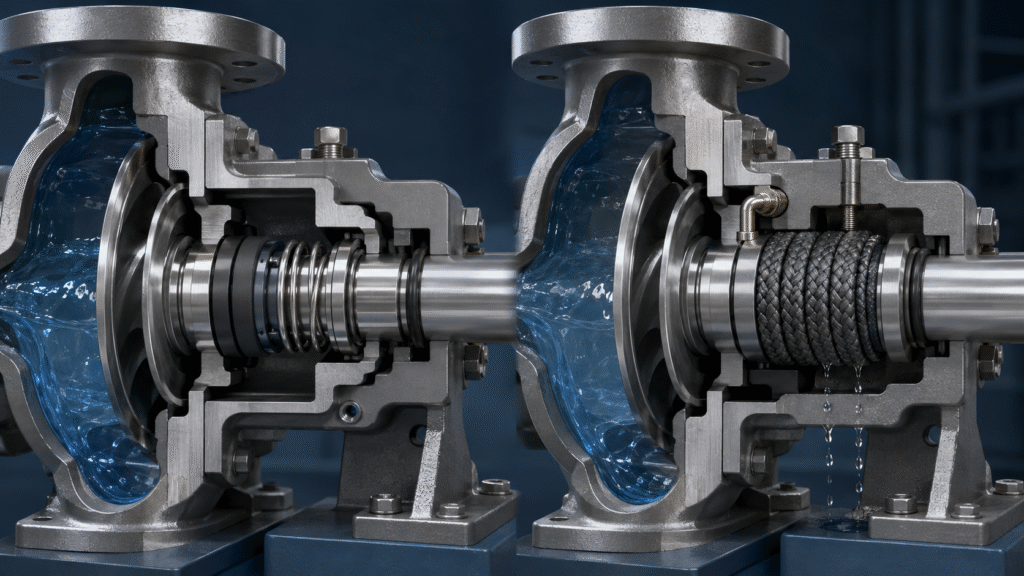
Compression packing consists of braided rings installed around a shaft or sleeve inside a stuffing box. The gland compresses those rings to restrict flow. However, the packing cannot run as a completely dry contact. A controlled liquid path removes frictional heat, lubricates the packing, and helps prevent rapid shaft or sleeve damage.
A mechanical seal places one rotating face against one stationary face. Springs and hydraulic force keep the faces together, while a microscopic fluid film provides lubrication. Therefore, normal leakage is usually much lower and may remain visually undetectable. Still, a liquid-lubricated mechanical seal is not absolutely leak-free at the face interface.
Contact Areas Create Different Wear Patterns
Packing contacts the shaft or replaceable sleeve along several rings. As a result, friction acts over a relatively large cylindrical area. Excessive gland tightening increases heat and can score or groove the sleeve. However, insufficient compression allows excessive leakage and may wash solids into the packing set.
Mechanical seal faces slide against each other rather than rubbing directly along the shaft. Static elastomers normally seal the rotating unit to the shaft or sleeve. Consequently, a correctly selected seal can reduce shaft wear. Face wear still occurs, and dry running or contamination can damage the precision surfaces quickly.
Leakage Differences in Pump Service
Leakage creates the clearest mechanical seal vs packing difference. Packing normally depends on a visible or measurable leakage rate. The required amount varies with packing type, shaft size, speed, fluid, and manufacturer instructions. Therefore, operators should set the gland from actual temperature and leakage behavior instead of using one universal drip rate.
Mechanical seals maintain a much smaller leakage path between flat faces. The AESSEAL mechanical seal overview explains that this fluid film lubricates the interface while limiting visible process loss. However, leakage can increase when faces chip, deposits hold them open, elastomers fail, or pump movement exceeds the seal’s tracking ability.
Hazardous and Valuable Fluids Change the Decision
Packing is difficult to justify when routine leakage creates a safety, environmental, hygiene, or product-loss problem. For example, toxic chemicals, strong odors, solvents, and valuable products may require stronger containment. Therefore, a single or double mechanical seal usually offers better control than a continuously leaking packed gland.
The Chesterton pump sealing guide also notes that hazardous services require special attention because packing cannot provide zero leakage. Nevertheless, a single mechanical seal still has a controlled microscopic leak path. A double arrangement with a suitable barrier or containment system may be necessary when atmospheric release remains unacceptable.
Initial Cost and Installation Cost
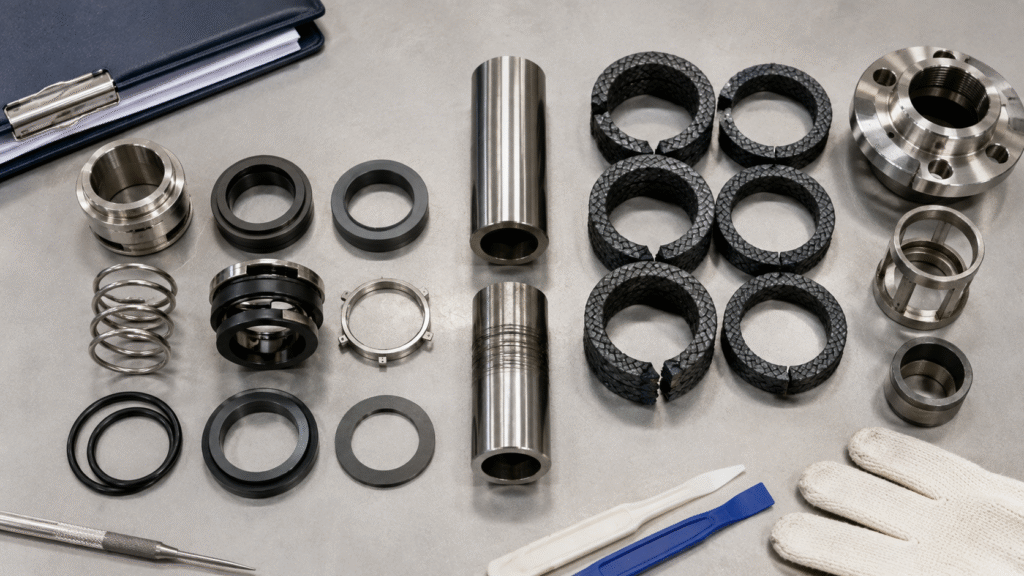
Packing usually has a lower initial purchase price. The rings are relatively simple, and many pumps already include a stuffing box and gland. In addition, maintenance teams can often cut and install replacement rings on site. These advantages can make packing attractive for noncritical pumps with easy access and acceptable leakage.
Mechanical seals normally cost more because they include precision-lapped faces, springs, secondary seals, and engineered metal components. Cartridge designs may also include a sleeve, gland, setting devices, and piping ports. However, easier setting can reduce installation errors and labor. The purchase comparison should therefore include the complete assembly and installation process.
Pump Modifications Can Alter the Budget
Converting a packed pump may require a different sleeve, seal chamber, gland, flush connection, or axial arrangement. Consequently, the first conversion can cost more than later replacements. Before ordering, confirm shaft dimensions, chamber depth, bolt pattern, runout, and available space. A pump mechanical seal range can help identify possible designs after those details are known.
Changing from a mechanical seal to packing also needs engineering review. The stuffing box must accept the correct ring size, gland, lantern ring, and flush arrangement. Therefore, neither conversion should rely only on shaft diameter. Pump design and process requirements must support the selected sealing method.
Operating Cost Beyond the Purchase Price
Mechanical seal vs packing economics depend heavily on recurring costs. Packing can consume product through controlled leakage and may need continuous external flush water. In addition, friction against the shaft can raise power demand. Cleanup, wastewater treatment, corrosion around the baseplate, and bearing contamination may add indirect expenses.
Mechanical seals can reduce many of those costs when they operate correctly. However, they may require a clean flush, cooling loop, quench, or barrier system. Those systems use water, energy, instruments, and maintenance effort. Therefore, compare the complete sealing arrangement rather than assuming every mechanical seal uses fewer utilities.
Labor and Downtime Often Dominate
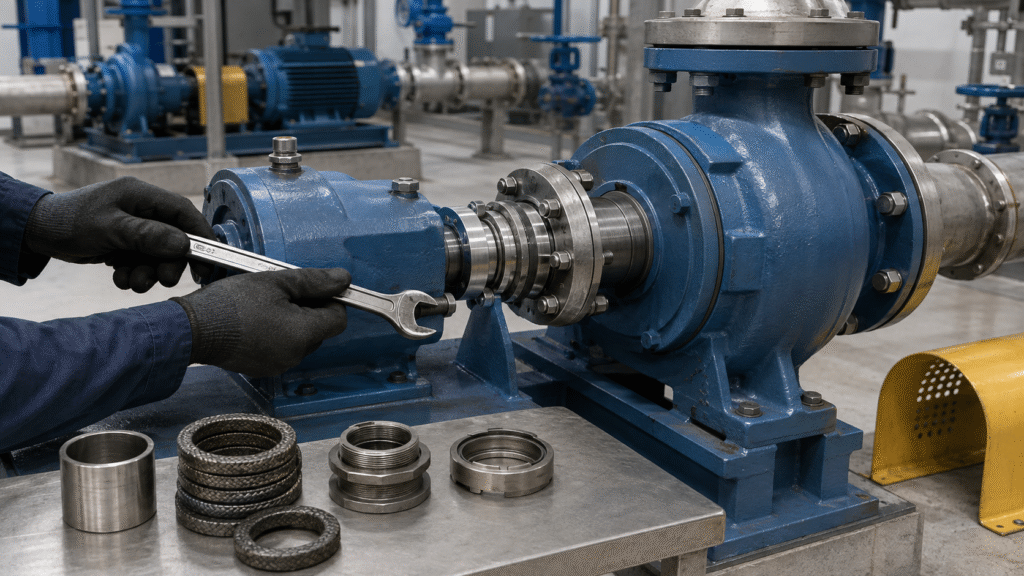
Packing allows technicians to make gland adjustments while some pumps remain in service. They can also add or replace rings without buying precision face assemblies. However, repeated adjustment requires labor and consistent operator judgment. Incorrect tightening can increase heat, leakage, and sleeve wear.
A mechanical seal usually needs little routine adjustment after correct installation. Nevertheless, replacement may require pump isolation, coupling work, and partial disassembly. Cartridge or split designs can shorten the task on suitable equipment. Consequently, downtime cost may favor a mechanical seal on critical pumps even when the replacement part costs more.
Mechanical Seal vs Packing Service Life
No honest comparison can promise one universal service life for either method. Packing life depends on shaft condition, speed, gland setting, solids, flush quality, material, and operator attention. Mechanical seal life depends on face lubrication, alignment, pressure, temperature, materials, vibration, and startup procedures. Therefore, actual operating data matters more than a generic lifespan claim.
Packing often gives gradual warning through rising leakage and frequent adjustment. However, the rings and sleeve may continue wearing between inspections. A mechanical seal can operate with little visible leakage for a long period, yet a face chip or dry-running event may cause a sudden leak. Maintenance plans must reflect these different failure patterns.
Shaft and Sleeve Condition Affect Both Options
A rough, grooved, or corroded sleeve shortens packing life and makes leakage control difficult. Tightening the gland cannot restore the damaged surface. Instead, excessive compression may deepen the groove. Therefore, technicians should repair or replace the sleeve before installing a new packing set.
Mechanical seals also need a suitable shaft or sleeve, although most designs do not use it as the primary sliding surface. Burrs can tear O-rings during assembly, while runout and end play disturb face contact. A guide on how to identify the correct mechanical seal helps confirm dimensions and operating conditions before replacement.
Where Packing Remains a Practical Choice
Packing can remain effective in large water pumps, some wastewater equipment, and selected slurry services. It may tolerate dirty operating environments where a precision face seal needs extensive support equipment. In addition, operators can adjust the gland as conditions change. Leakage must still remain safe, manageable, and compatible with site rules.
The Flowserve LC slurry pump illustrates that engineered slurry pumps may offer wet packing and several mechanical seal options. This choice shows why application details matter. Solids concentration, flush availability, shaft speed, product value, and maintenance skills can favor different arrangements. Therefore, packing should not be dismissed as obsolete in every industrial pump.
Packing Needs Correct Installation and Adjustment
Installers should stagger ring joints, seat each ring separately, and use the correct packing cross-section. If a lantern ring is required, it must align with the flush port. Next, technicians should tighten the gland evenly and allow controlled leakage during startup. Finally, they should make small adjustments as temperature and leakage stabilize.
Overtightening is a common mistake because it may stop leakage briefly. However, the resulting heat can glaze the packing, damage the sleeve, and shorten service life. Proper adjustment aims for stable operation, not a dry gland. The packing supplier’s instructions should guide the final setting.
Where Mechanical Seals Offer Greater Value
Mechanical seals often provide greater value when visible leakage is unacceptable or costly. Chemical processing, food production, clean utilities, volatile liquids, and enclosed equipment may justify stronger containment. In addition, a seal can reduce housekeeping and protect nearby bearings or structures from constant wetting.
A mechanical seal material selection guide helps match faces, elastomers, and metal parts to the liquid. Material choice remains critical because a high-quality design can still fail in an incompatible chemical. Therefore, provide the supplier with fluid concentration, temperature, pressure, solids, speed, cleaning chemicals, and dry-running risk.
Mechanical Seals Need Stable Pump Conditions
Mechanical seals respond poorly to dry running, cavitation, excessive vibration, and major shaft movement. Consequently, upgrading from packing will not correct damaged bearings or poor suction conditions. The pump should provide adequate priming, venting, alignment, and seal-chamber circulation before the conversion begins.
If a mechanical seal leaks after installation, technicians should check working length, face cleanliness, elastomer damage, runout, and operating conditions. They should not immediately blame the seal material. A structured diagnosis can separate an installation problem from a hydraulic or mechanical pump problem.
Mechanical Seal vs Packing Maintenance
Packing maintenance focuses on leakage, gland temperature, adjustment remaining, flush flow, and sleeve condition. Increasing adjustment frequency may indicate worn rings or a damaged sleeve. In addition, uneven gland position can show poor installation. Operators should record changes rather than tightening the gland without investigating the cause.
Mechanical seal inspections focus on leakage pattern, temperature, vibration, support-system condition, and pump behavior. A mechanical seal installation and maintenance guide can help organize startup, shutdown, and routine seal checks. can help organize startup and shutdown checks. However, technicians should avoid touching or polishing lapped faces casually. Precision face condition and correct flatness are essential to reliable sealing.
How to Compare Total Lifecycle Cost
First, record the purchase price, installation labor, and any conversion hardware. Next, estimate product loss, flush-water use, power demand, cleanup, and wastewater handling. Then include adjustment frequency, planned replacement labor, sleeve repairs, and likely downtime consequences. This method creates a fairer mechanical seal vs packing comparison.
Avoid inserting unsupported service-life assumptions into the calculation. Instead, use maintenance records from comparable pumps. If records are unavailable, begin with a monitored trial on a suitable asset. Finally, document leakage, labor, utility use, sleeve condition, and operating hours before making a site-wide decision.
A Practical Selection Checklist
Choose packing when controlled leakage is acceptable, staff can adjust it correctly, and the pump suits packed operation. Also confirm that flush water, drainage, and sleeve maintenance remain manageable. However, avoid packing when routine release creates unacceptable safety, hygiene, environmental, or product-loss risks.
Choose a mechanical seal when leakage control, reduced adjustment, shaft protection, or critical uptime justifies the higher initial cost. In addition, confirm compatible materials and stable operating conditions. The final mechanical seal vs packing choice should match the fluid, pump, site capability, and cost of failure.
Final Mechanical Seal vs Packing Decision
Packing offers low purchase cost, simple field replacement, and useful flexibility in selected water and slurry services. However, it needs controlled leakage, periodic adjustment, and attention to sleeve wear. Therefore, its true cost includes utilities, labor, lost product, cleanup, and eventual shaft or sleeve repair.
Mechanical seals offer stronger leakage control and less routine adjustment in suitable applications. Nevertheless, they require precise installation, correct materials, and stable pump operation. Ultimately, the best mechanical seal vs packing decision compares total lifecycle cost, acceptable leakage, maintenance capability, service risk, and realistic operating history.